
Bozeman, MT
Masonry and natural stone
Mortared stone is the work that shows every shortcut. Joints, coursing, how a cap lands on a corner — none of it hides. Masonry is the side of the business this crew came up through, and it is the work we would rather be doing.
Stone veneer
Cut limestone, ledgestone, sandstone and full-bed natural stone over block or framed walls. Substrate gets a weather barrier, lath and a scratch coat before a single stone goes on. Stones get laid out dry first so the coursing, the color spread and the corner returns are decided before they are stuck down. Joints get struck consistently and cleaned while the mortar is still green — raked joints on rustic stone, tighter joints on cut stone.
Outdoor fireplaces and fire features
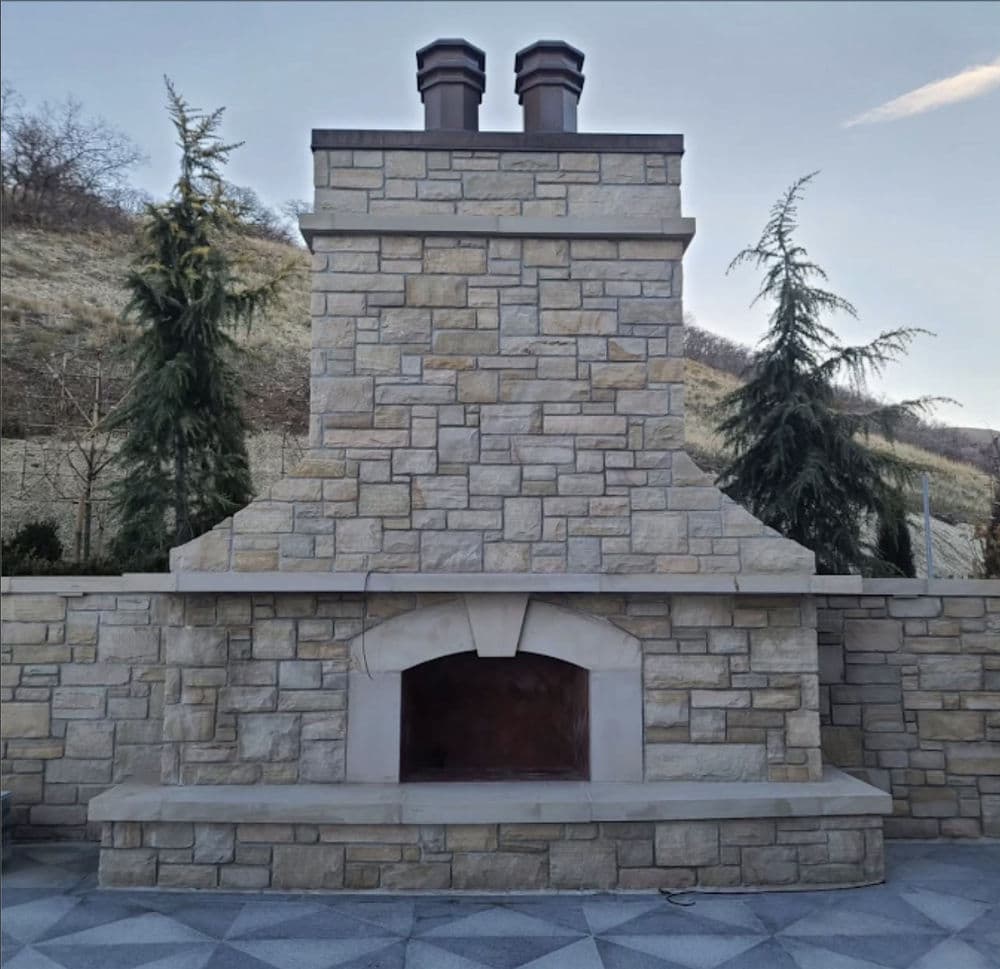
Fireplaces get a poured footing below frost depth, a block core, a firebox and flue sized to actually draw, and a cap and chimney detailed so water sheds off instead of soaking in. Cast stone or cut stone caps go on hearths, shoulders and chimney tops for the same reason. Simpler fire features — a block fire pit with a steel insert, or a gas fire table pad — get built on the same base as the patio they sit in: 3/4" clean crushed base, 8" to 16" deep depending on the soil and the application, compacted in lifts.
Seat walls, caps and columns
Seat walls get a mortared core on 3/4" clean crushed base, 8" to 16" deep depending on the soil and the application, compacted in lifts, with drainage behind them, and a flat cap wide enough to sit on comfortably. Caps are laid with a slight fall so water runs off the face instead of standing on the joint and freezing. Columns and pilasters get built around a reinforced core, not stacked on a slab and hoped for.
Flagstone, slab steps and boulders
Flagstone patios and paths get fitted on site: each piece cut to its neighbor rather than set in a grid with fat joints. Mortar-set flagstone goes over a concrete slab; dry-laid flagstone goes over the same 3/4" clean crushed base, compacted in lifts, with the joints filled in stone dust or gravel. Sandstone slab steps get set between boulders and shimmed on compacted rock so they sit dead still. Boulders get placed with the loader, buried a third of the way in, and turned so the weathered face points out.
Cold weather and freeze-thaw
Mortar that freezes before it cures is ruined mortar. Late in the season we tent the work and run heat so the wall stays above freezing while it sets, which is why some of our photos have plastic sheeting and a salamander heater in them. The same problem is why detailing matters here more than in a mild climate: flashing, drainage behind the veneer, and caps that shed water are what keep a wall from spalling apart after a few Bozeman winters.
Recent work
Outdoor fireplace and cut stone wall with cast stone caps.
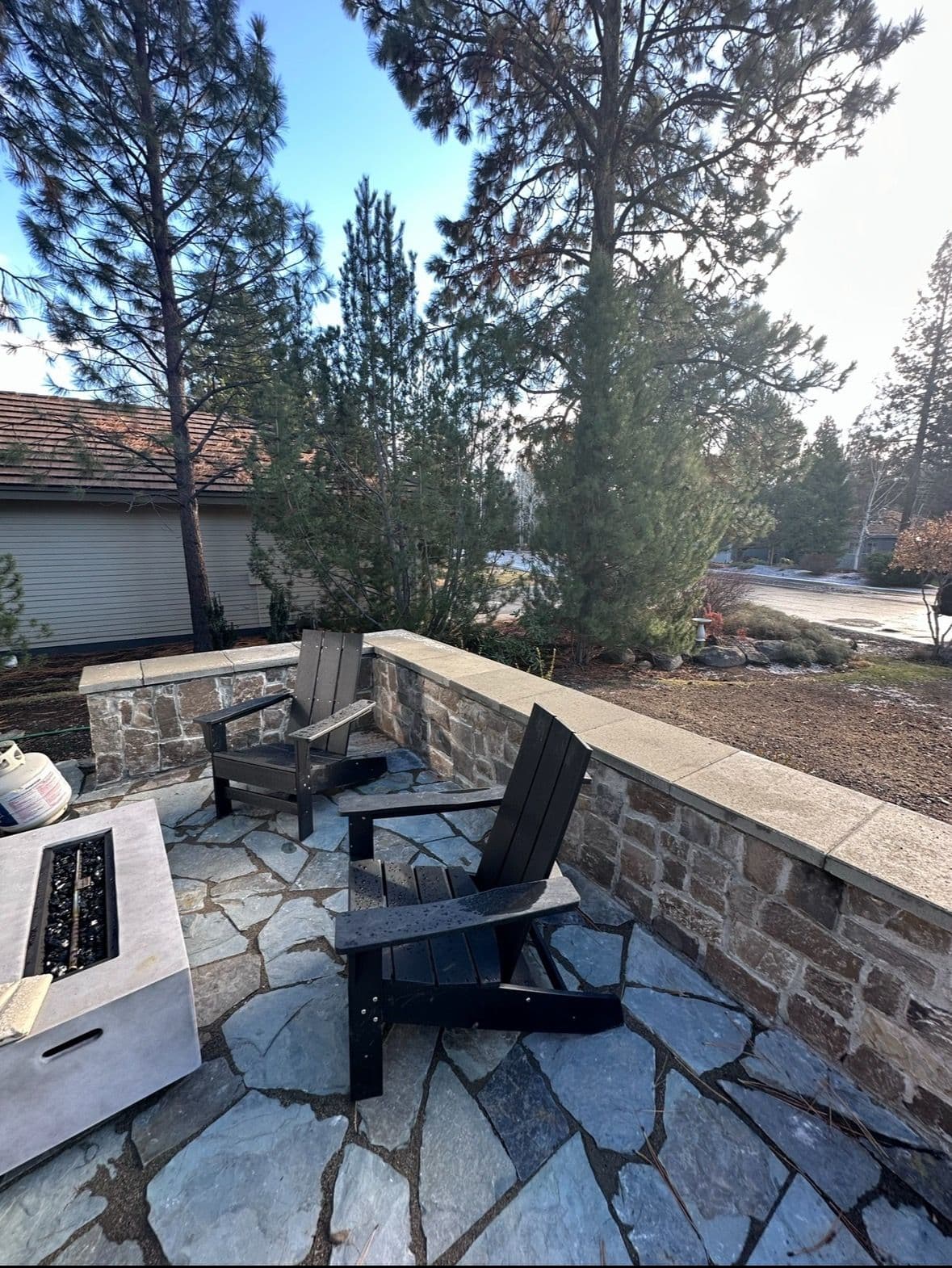
Flagstone patio with a capped stone seat wall.
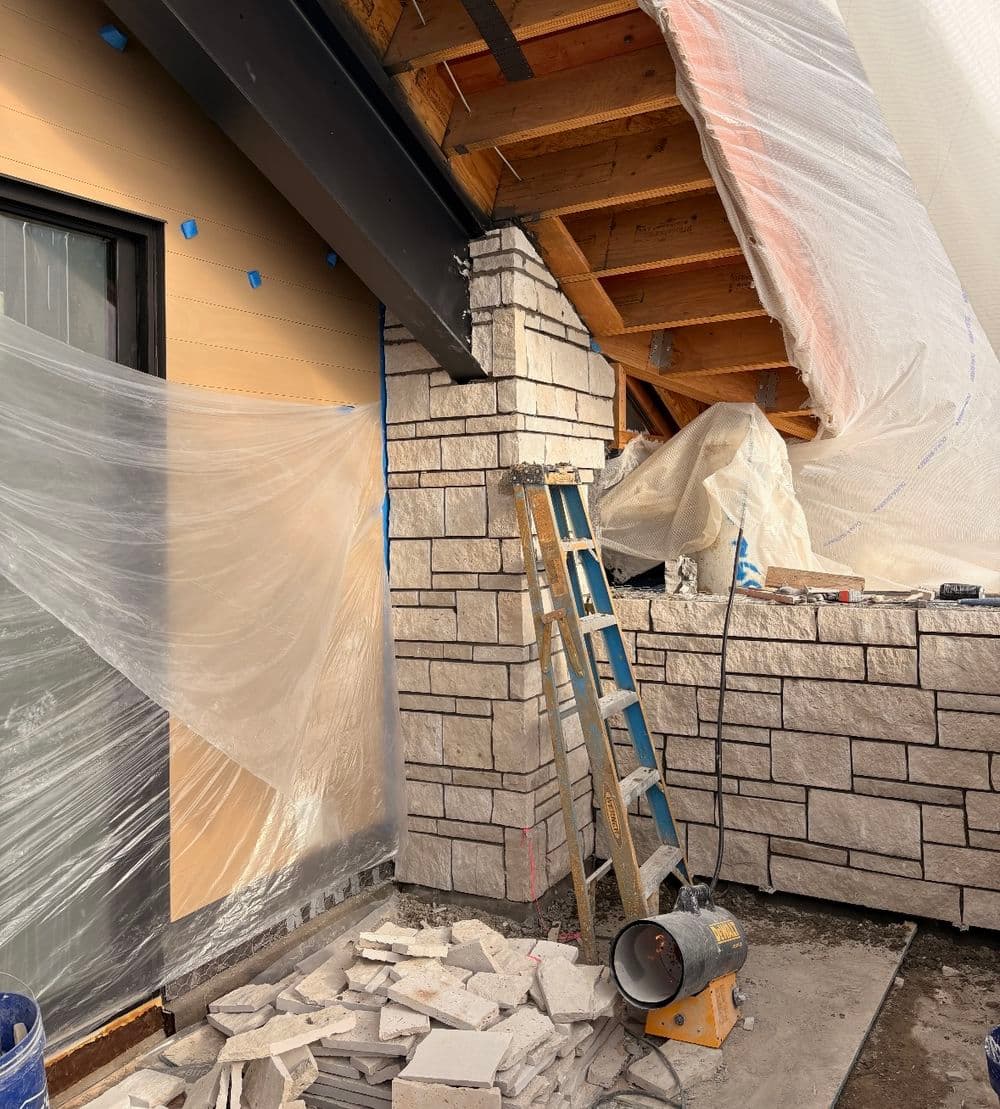
Veneer work tented and heated so the mortar sets in cold weather.
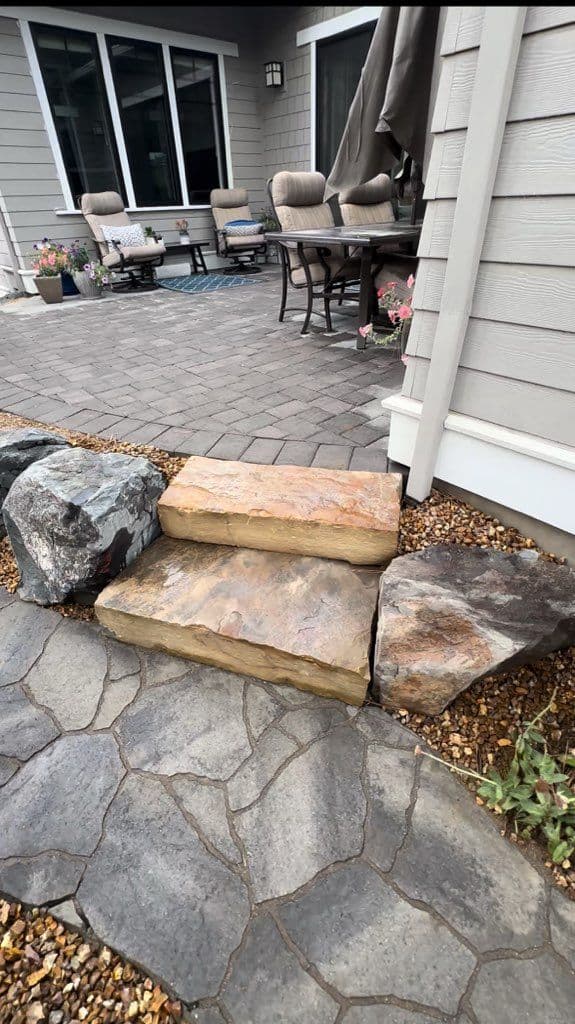
Sandstone slab steps set between boulders.
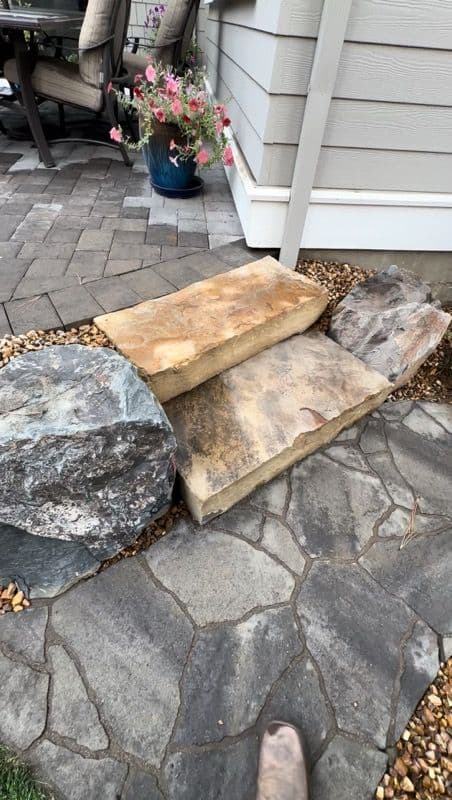
Slab steps bedded tight against the boulders.
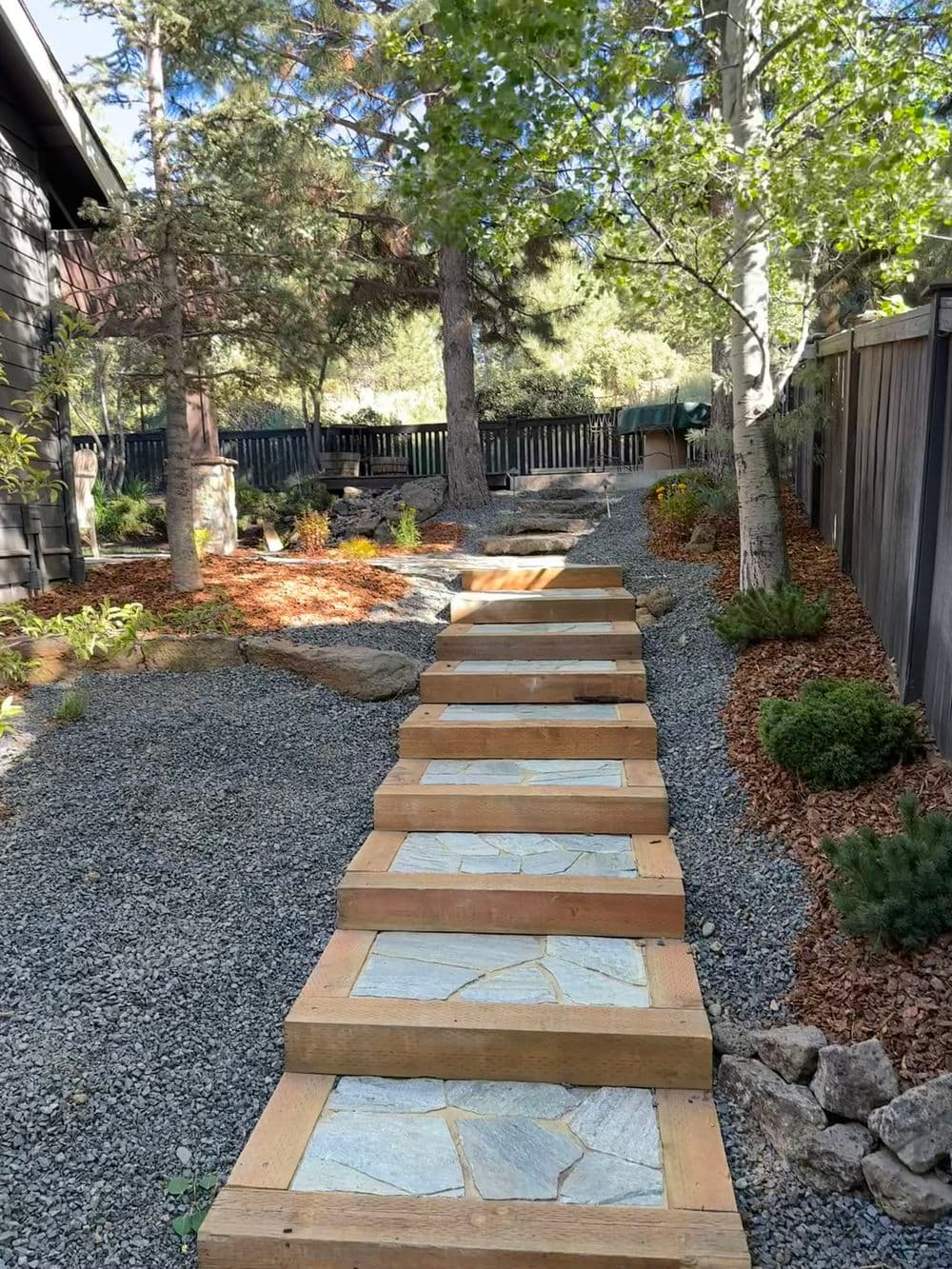
Timber-framed treads filled with fitted flagstone.
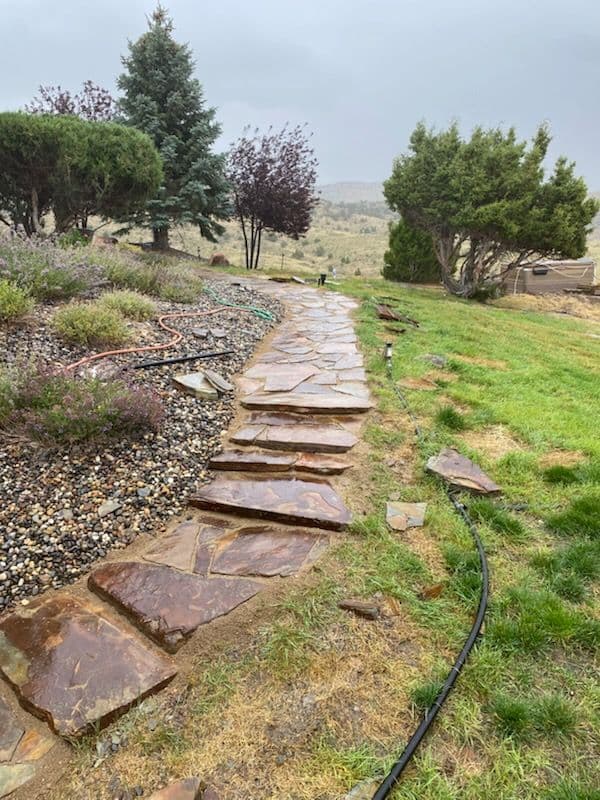
Flagstone path stepping down a grade.
Questions we get
- Natural stone or manufactured veneer?
- Both work. Manufactured veneer is lighter and cheaper and the color is consistent across the lot. Full-bed natural stone costs more, weighs more, needs a proper ledge or footing to carry it, and looks like stone from three feet away because it is. We will price either one, and we will tell you which one the wall you have can actually carry.
- Can you match the stone already on my house?
- Usually close, sometimes exactly. We take photos to the supplier and pull samples to hold against the existing wall on site. Where the original stone is discontinued, the honest answer is that we get near it and place the new work so the transition is at a natural break rather than mid-wall.
- How long does a fireplace or a stone wall take?
- Footing and core, then veneer, then caps, with cure time between stages. A patio-scale fireplace is measured in weeks, not days, and weather moves it. The proposal gives you the sequence so you know what is happening in what order.
- Do you do repairs, or only new work?
- We do repairs when the underlying problem is fixable — repointing, resetting a cap, rebuilding a section that failed because water was getting behind it. If the failure is structural or the wall was built wrong from the footing up, we say so instead of selling you a patch that fails again.
- What does it cost?
- Stonework prices by the square foot of face, the stone you pick, and how much cutting the detail needs, so there is no useful number until someone looks at it. Send the form for a site visit and a written proposal, or call or text (406) 577-6201.
Get it priced
Send the form for a site visit, or call or text (406) 577-6201.