
Bozeman, MT
Paver patios built to survive the freeze-thaw
A paver patio in Bozeman gets worked on all winter by the same thing that breaks up the roads: water in the ground, freezing and letting go. What keeps the surface flat is the rock under it and a perimeter that cannot move. Here is how we build one, in order.
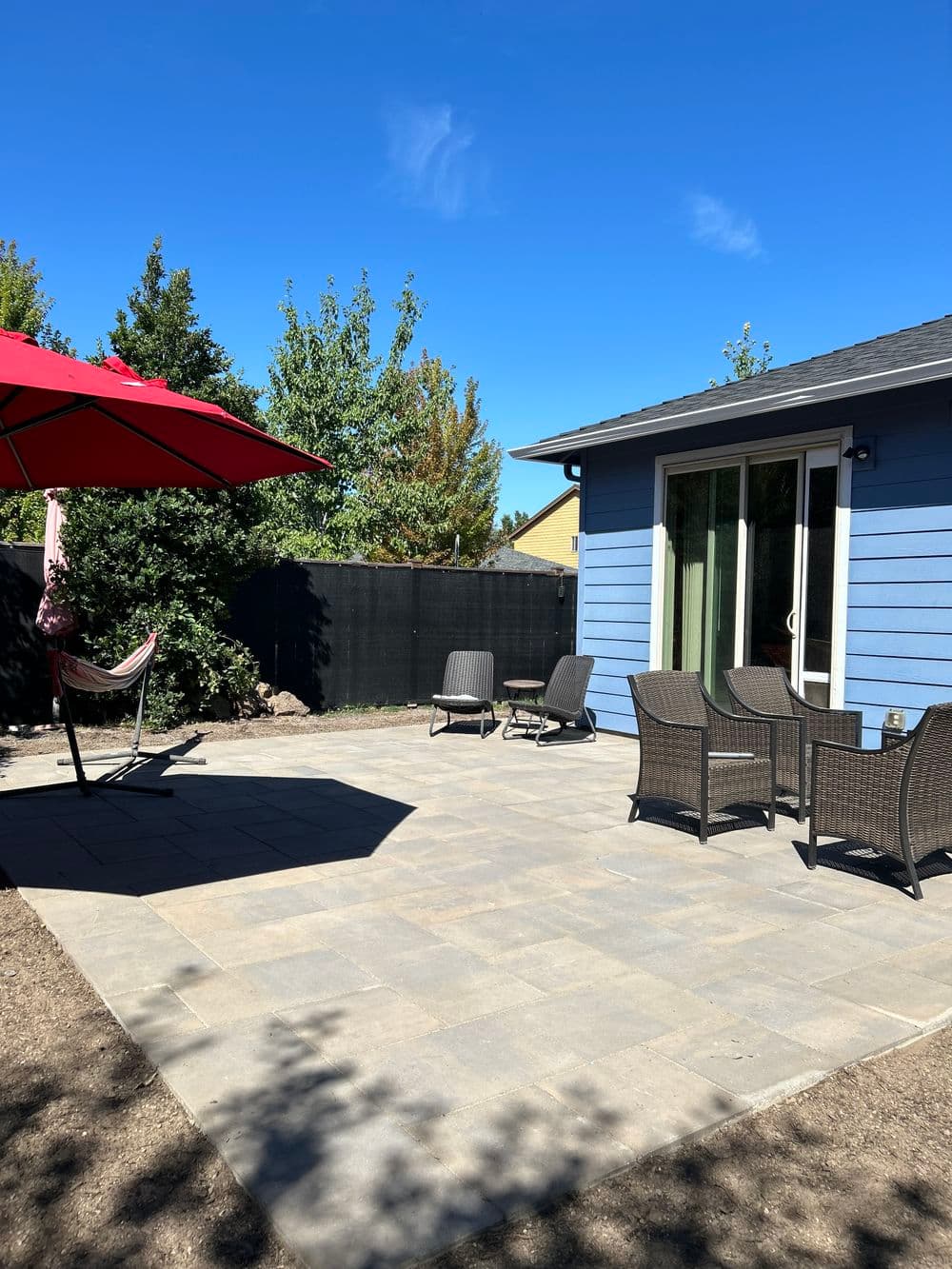
Excavation and base depth
We strip topsoil and old builder fill down to firm subgrade, then build back up with 3/4" clean crushed base, 8" to 16" deep depending on the soil and the application, compacted in lifts. Lifts run about four inches, each one plate-compacted, wetted if the rock is too dry to knit together. Soil in Bozeman changes block to block. Gravelly ground near a creek sits at the shallow end of that range, heavy clay on the valley floor at the deep end. Soft subgrade gets geotextile fabric first so the base cannot pump down into mud.
Bedding, wet-saw cuts and polymeric sand
On that base goes a screeded bedding course of about an inch, never thicker. A deep sand bed is what makes a patio roll and dip two years later. Pavers get laid off a string line and checked as the field runs out, so the courses stay square to the house. Field cuts come off a wet saw, and the layout gets adjusted to keep cut pieces bigger than about a third of a paver. Then polymeric sand goes in the joints, the surface gets compacted with a plate and a protective pad, and we re-sand what settles.
Edge restraint: poured concrete, not plastic
Pavers spread sideways if nothing holds the perimeter, and the edge is where a patio comes apart first. The standard cheap answer is plastic edging spiked into the base. We do not use it, and we do not use steel. Every paver edge we build gets a poured concrete curb, a haunch formed against the outside course and kept below finished grade so it never shows. Freeze-thaw walks spikes out of the ground over a few winters. A buried haunch does not move. Where the patio meets gravel, a soldier course sits on the concrete.
Pitch, downspouts and where the water goes
Before we build we look at where water already runs: the downspouts, the slope off the house, the low spot that stays soft into June. Patios get pitched away from the foundation, usually around a quarter inch per foot. Downspouts get piped out past the new work or dropped into a river rock bed instead of icing over fresh pavers. Newer subdivisions toward Four Corners and Belgrade often have a drainage swale crossing the yard that cannot be filled, so the layout works around it. A grade change is a retaining wall conversation.
Patterns, paver formats and borders
Herringbone interlocks the best, which is why it goes on driveways and on patios that take furniture traffic. Large-format pavers read as fewer, bigger lines and cut tight to a house wall. Flagstone-pattern pavers give the irregular look of fitted stone on a flat surface, with a fraction of the cutting. We install Belgard pavers along with the other lines carried locally. Pattern, border and color mix get settled before the first pallet is opened, and a contrasting soldier course is what makes an edge look decided instead of like where the pavers ran out.
What a paver patio job looks like day to day
Day one is layout and excavation. Then base rock goes in and gets compacted in lifts, the slowest part of the week and the one that decides everything. Laying goes fast once the screed is set. Cutting the perimeter and the ring for a fire pit takes longer than the field did. Last comes sand, final compaction and a clean site. Access sets the pace: an alley and a narrow side yard in an older Bozeman neighborhood means a narrow track loader or wheelbarrows, priced in the proposal. The sequence is the same across our hardscape work.
Recent work
Large-format pavers, cut tight to the house.
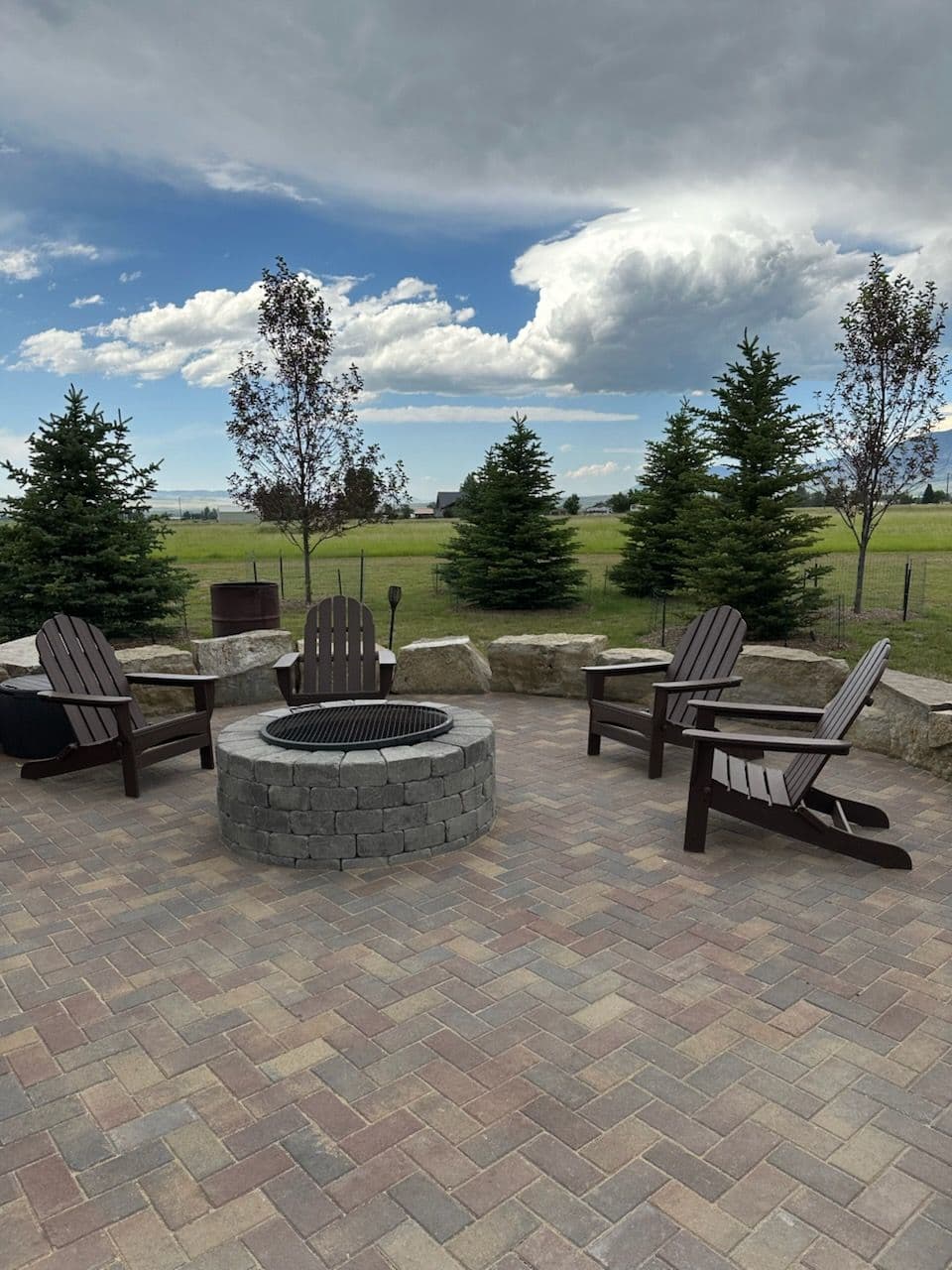
Herringbone paver patio, block fire pit, boulder seating.
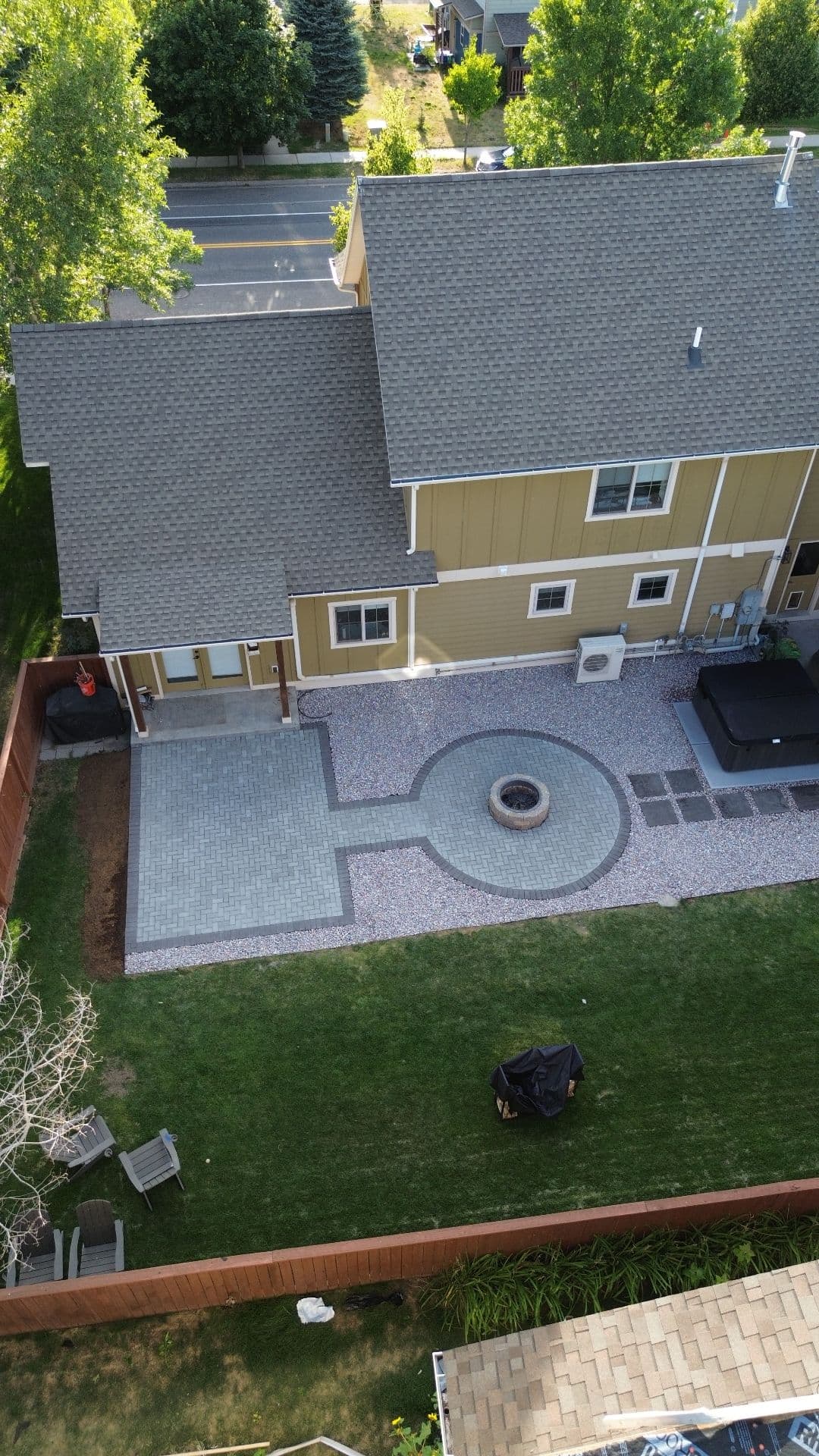
Square patio, circular fire pit court, gravel bands between.
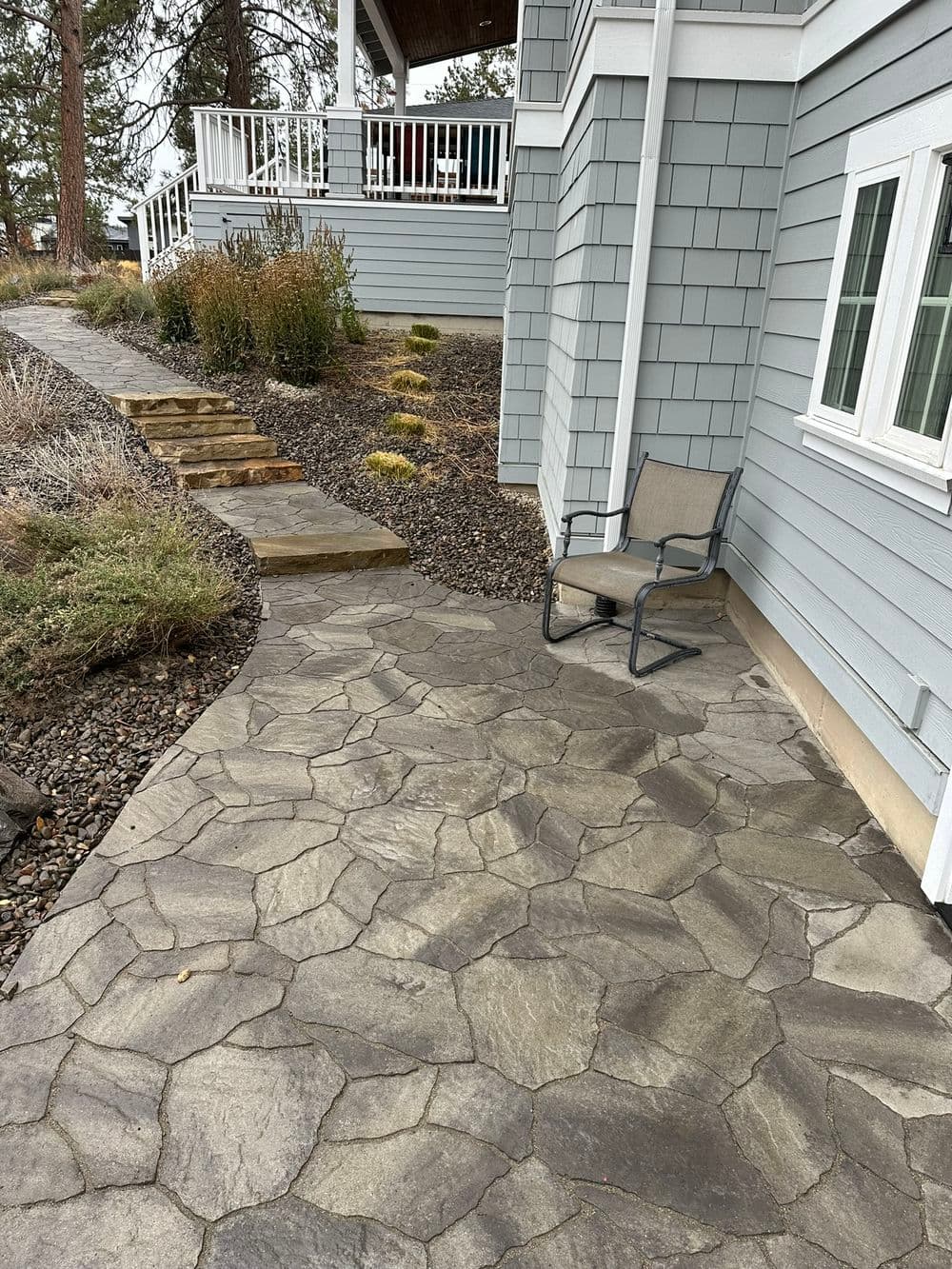
Flagstone-pattern pavers with sandstone slab steps.
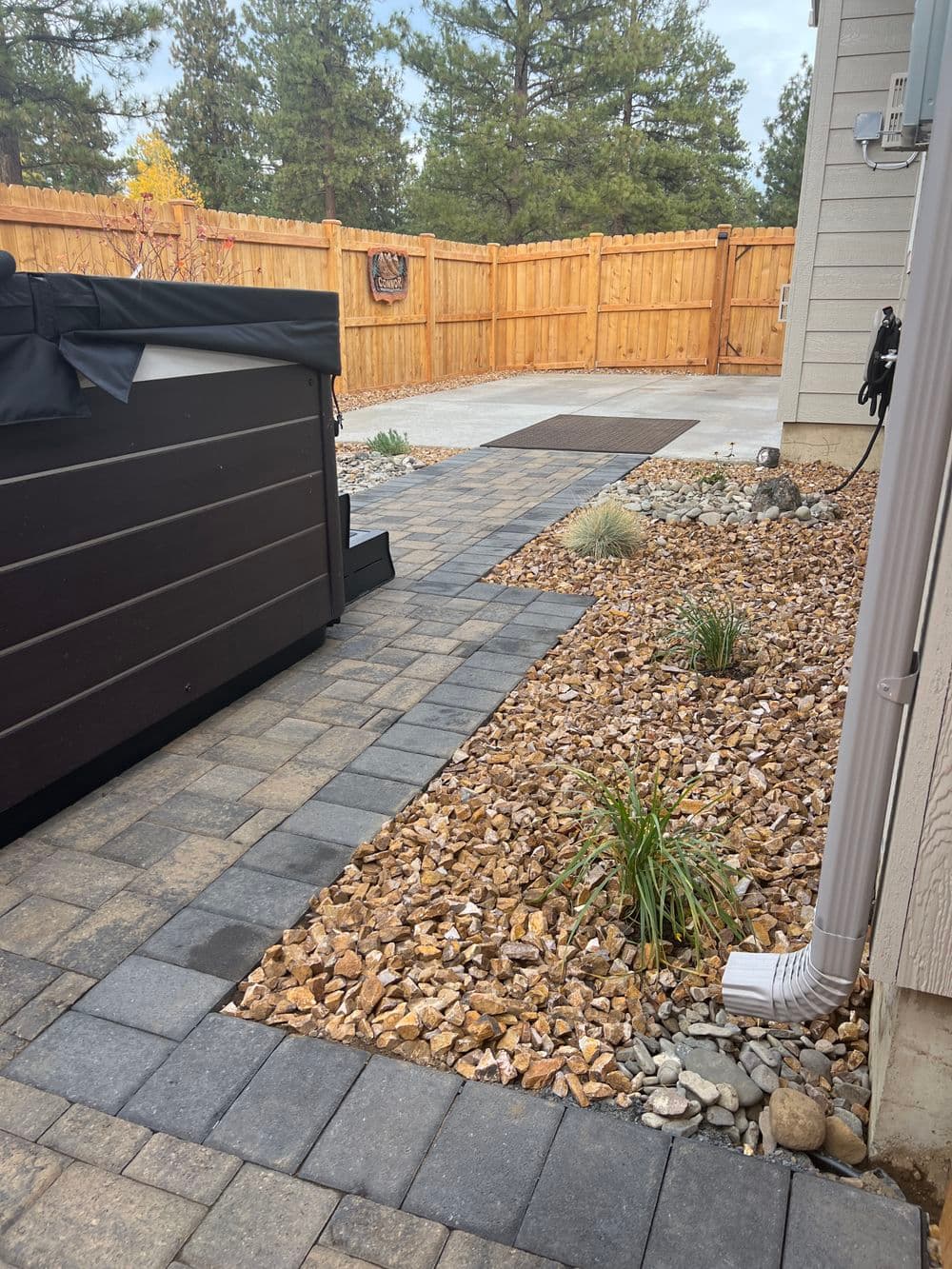
Walkway with a contrasting border course and a rock drainage bed.
Questions we get
- Why pavers instead of a poured concrete slab?
- Concrete is one rigid piece. When the ground under it moves, and here it moves every spring, the slab cracks and the crack is permanent. A paver field is thousands of small pieces on a compacted base, so it moves with the ground. If an area settles, we lift it, fix the base and relay the same pavers.
- Will a paver patio settle or heave over a Bozeman winter?
- Some settling in the first season is normal and shows up as joint sand dropping, which gets re-sanded. Real heaving comes from a shallow base, a thick sand bed, or water trapped underneath. Kent M. was worried the weight of cars would sag his pavers, so that job got extra gravel depth and extra compaction. It has not sagged.
- Do I need a permit for a paver patio?
- A patio at grade usually does not. What pulls a permit in is a retaining wall over four feet, work inside a drainage easement, or a subdivision with its own review. The City of Bozeman and Gallatin County handle it differently, and HOA landscape rules are separate from both. We tell you which applies at the site visit.
- What keeps weeds and ants out of the joints?
- Polymeric sand. It is joint sand with a binder that sets when you wet it, so the joints lock instead of washing out and feeding weed seed. It is not permanent. Joints that get pressure washed or take hard runoff need topping up every few years, which is a broom and a hose, not a rebuild.
- How do I get a price?
- Send the form with the address and what you are thinking about, or call or text (406) 577-6201. We come out, measure, look at access and drainage, and you get a written proposal with the scope, the materials, the base depth and what is excluded. Changes after that go in writing before anyone builds them.
Related work
- Retaining walls: segmental block and quarried boulder
Retaining wall contractor in Bozeman MT: segmental block and quarried boulder walls, drained and compacted in lifts. Send the form to set up a site visit.
- Fire pits, gas fire tables and seat walls
Fire pit installation in Bozeman MT: wood-burning pits with steel insert rings, gas fire table pads and seat walls. Send the form to set up a site visit.
- Hardscape: patios, walkways, walls and fire pits
Paver patios, walkways, retaining walls and fire pits in Bozeman and the Gallatin Valley. Send the form to set up a site visit and a written proposal.
Get it priced
Send the form for a site visit, or call or text (406) 577-6201.