
Bozeman, MT
Sod installation, sod removal and new lawns
Sod installation is mostly what happens before the sod shows up. New construction in Bozeman leaves compacted ground, buried fill and a grade that runs the wrong way, and a pallet of grass laid over that tells on all three by August. We lay sod, pull old lawn out, and put in mulch, rock and native plantings.
What sod installation includes
Ground that has had a house built on it is packed hard, and roots will not go into it. We break it up, pull out what the builder left under the topsoil, which is usually concrete chunks, gravel, sand and scrap, and bring in topsoil where there is not enough. Then the grade gets corrected, because builder grading is rough grading and it often runs flat or back toward the foundation. Final grade falls away from the house and off the walks, and it gets raked and rolled so there are no dips holding water under the sod.
Laying it
Sod starts cooking on the pallet, so it goes down the day it arrives. Rolls get laid against a straight edge with the seams pushed tight and staggered like brickwork, because a gapped seam dries out and stays a line in the lawn for a year. Curves and bed edges get cut with a knife rather than folded over. Edges along a walk or a patio get set a touch low so the mower is not scalping them. Then the whole thing gets rolled to press the roots into contact with the soil.
The first few weeks
New sod has no root system, so it lives on water. Keep it moist, all of it, including the corners and the strip along the walk that the sprinkler misses, and do not let the seams dry out and curl. Stay off it, and keep the dog off it, until it has knitted down. You check that by lifting a corner in the middle of the lawn: if it comes up like a rug, it is not rooted. First mow comes after that, mower high, blade sharp. We go through this with you the day we finish.
Irrigation
A lot of the sod we lay goes over a yard that already has sprinklers, and often enough the system is part of the problem. Heads get buried by the new grade, sunk, crushed or aimed at a fence. We repair and reset what is there as part of the job: heads raised to finished grade, broken ones replaced, arcs adjusted so the coverage overlaps instead of leaving dry stripes. A dry stripe in a new lawn is usually a coverage problem, not a watering problem, and it shows up in week two or three.
When to lay sod in Bozeman
Sod installation runs from spring, once the ground has thawed and dried enough to grade, through early fall. Sod laid in midsummer heat takes more water and more attention, but it takes. Late fall is a gamble, because the roots need time in unfrozen ground before winter and some years they do not get it. On county places out toward Four Corners and Gallatin Gateway the water comes off a well, which is worth thinking about before picking how much lawn to put in, and a septic drain field is not somewhere to run a machine.
Sod removal, mulch, rock and xeriscape
The other direction is just as common. We have pulled lawns out for mulch beds, rock beds and native xeriscape: less water, less mowing, and something that still looks like something in August. Sod gets cut and hauled, the grade gets fixed, and beds go in with the plants spaced for the size they end up, not the size they arrive. Young trees get staked, because the wind out toward Belgrade will lean a new tree over before it roots. We draw the layouts and plant plans as well, and we also do fall cleanups.
Recent work
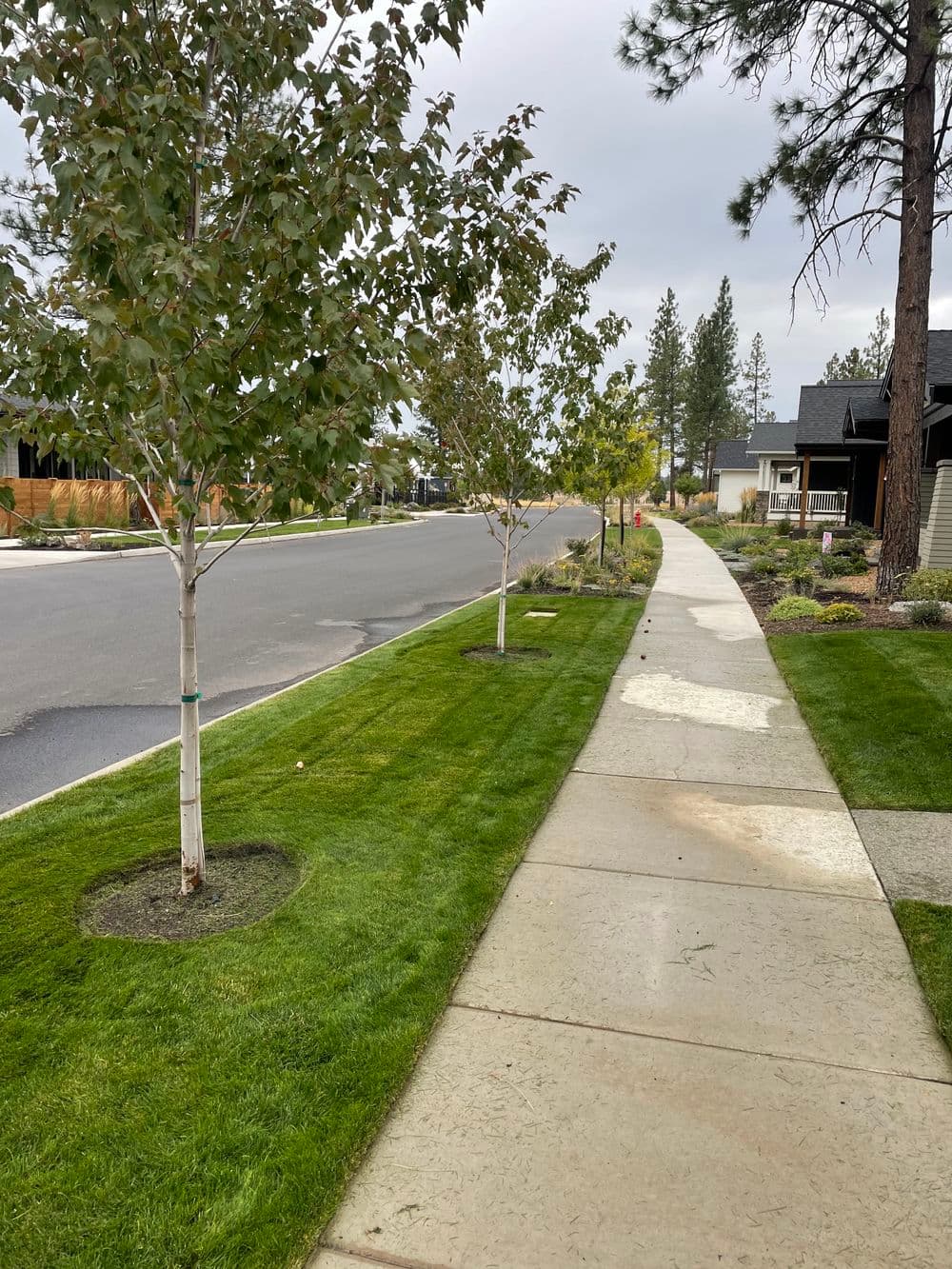
New sod, seams tight, laid the length of the walk.
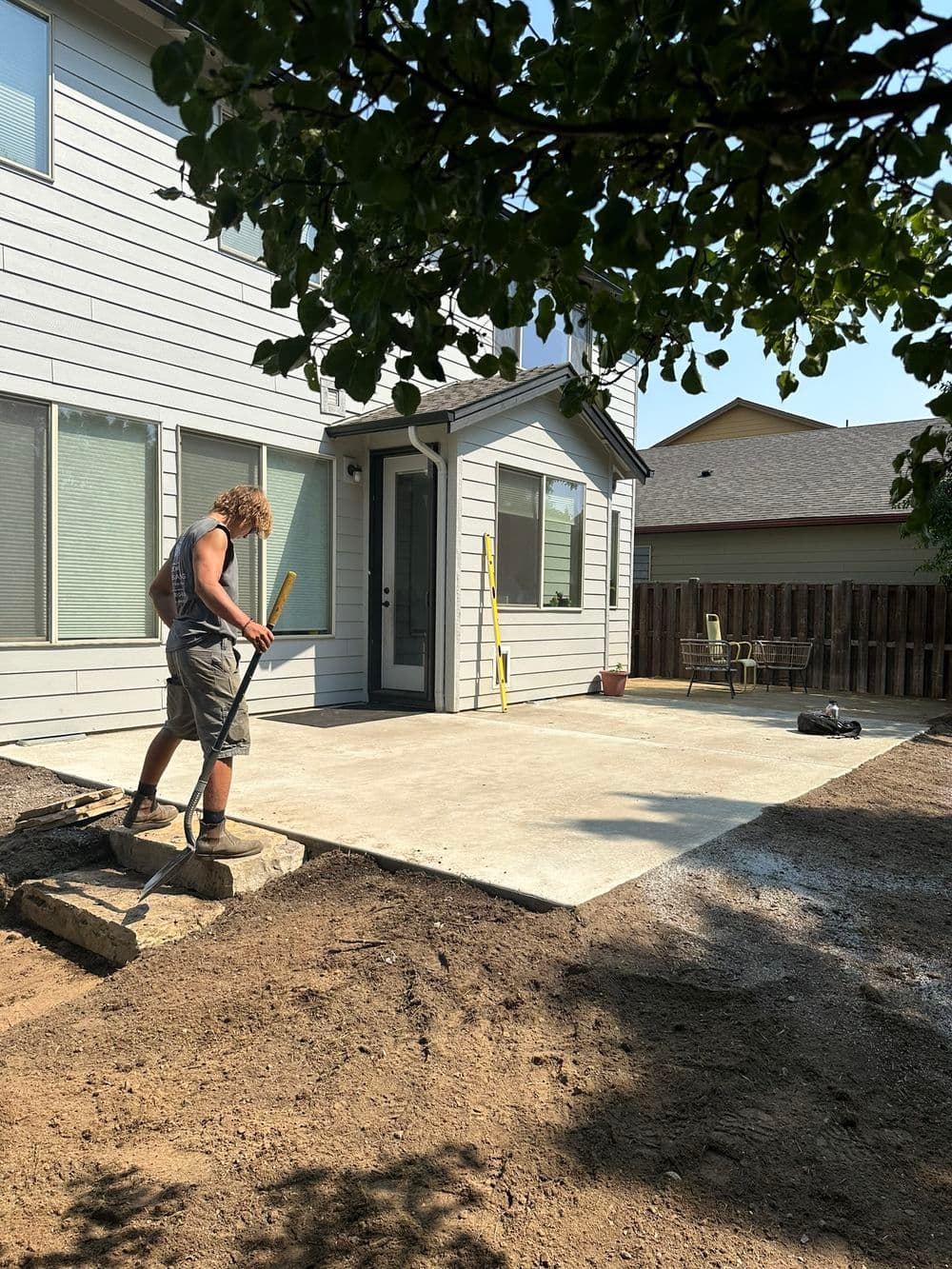
Breaking up compacted ground before grading for sod.
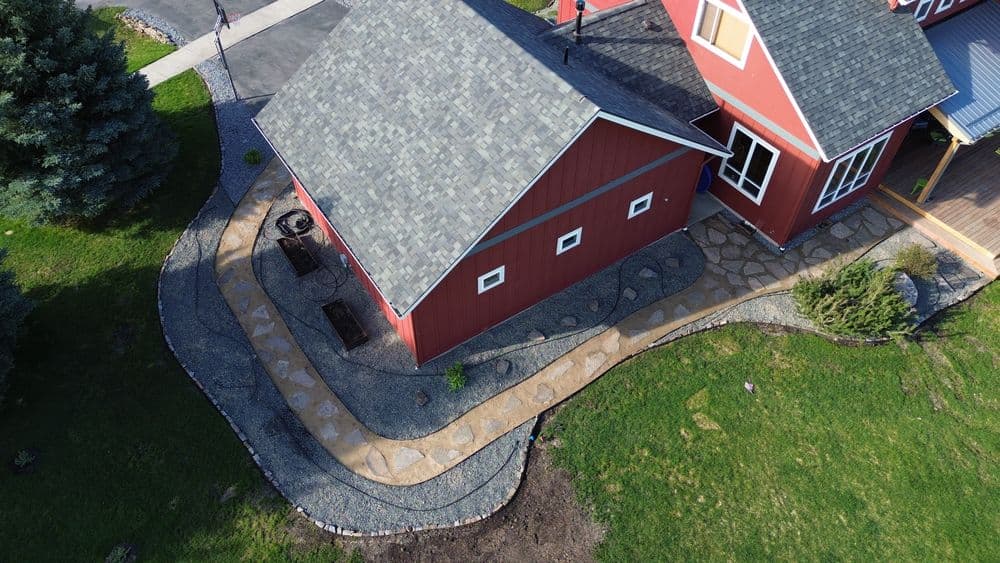
Crushed gravel path edged with boulders.
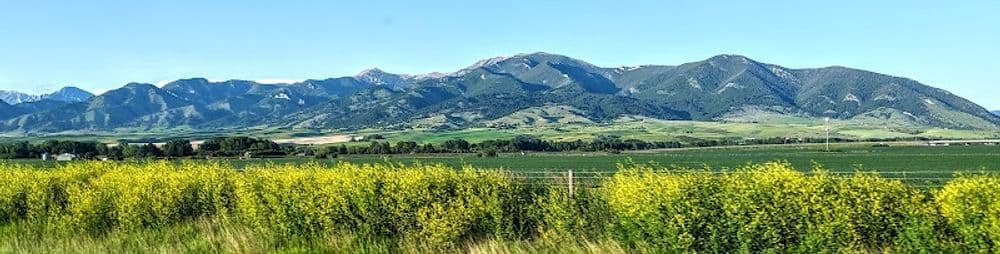
The Gallatin Valley, looking at the range.
Questions we get
- Sod or seed?
- Sod is a lawn the day it goes down, it holds a slope, and it crowds out the weeds that take over a seeded yard. Seed costs less and gives you more choice of grass, but it needs a clean seedbed, weeks of watering, and weather that does not blow it or bake it. On a new build with bare dirt and a dog, sod is usually the answer.
- How soon can we walk on it?
- Keep off until it has rooted. Lift a corner of a piece in the middle of the lawn: if it comes up like a rug, it is not ready. Traffic before that pulls the seams apart and leaves ridges you look at all season. Dogs are the hard part, and the usual answer is a temporary fence and a gravel corner for a few weeks.
- Can you take the lawn out and put in something that does not need watering?
- Yes. We pull sod for mulch beds, rock beds and native and xeriscape planting. Two things to check first: whether your HOA has rules about front-yard landscaping, which newer subdivisions west and north of Bozeman often do, and whether there is a drainage swale in the yard that cannot be filled or planted over.
- Do you fix the sprinklers, or do I need someone else?
- We repair and reset what is already there as part of a sod job: heads raised to grade, broken heads replaced, arcs adjusted so coverage overlaps. The proposal says which heads we are touching. If the system needs redesigning rather than repairing, we say that at the site visit rather than at the end.
- How do I get a price?
- Send the form with the address and what you are thinking about, or call or text (406) 577-6201. We come out, measure, look at access and drainage, and you get a written proposal with the scope in it: the prep, the square footage, what is included and what is not.
Related work
- Landscape design for Bozeman yards
Landscape design in Bozeman, MT: layout, plant plan, materials, grades and phasing, drawn to be buildable. Send the form for a site visit and a proposal.
- Fall cleanup and leaf removal in Bozeman
Fall cleanup in Bozeman, MT: leaf removal off the lawn and out of the beds, beds cut back, debris hauled off before the snow. Send the form for a site visit.
- Paver patios built to survive the freeze-thaw
Paver patio installation in Bozeman MT on deep compacted base with poured concrete edge restraint. Send the form for a site visit and a written proposal.
Get it priced
Send the form for a site visit, or call or text (406) 577-6201.