
Bozeman, MT · September 25, 2026
When to build a patio in Bozeman: the season, month by month
The build window in the Gallatin Valley is set by the ground, not the calendar. Here is how spring, summer, fall and winter each work for a paver patio, and when to call if you want one finished by a particular month.
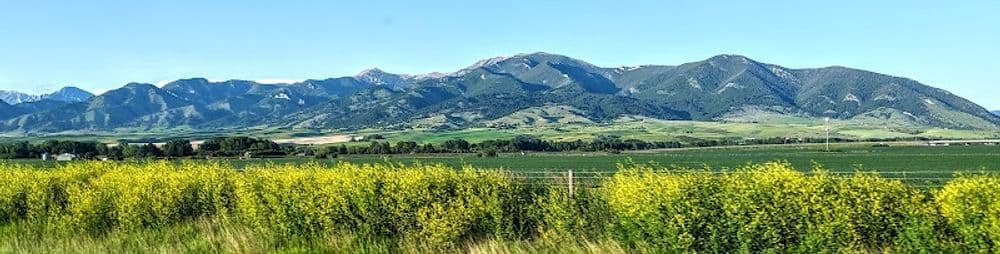
The Gallatin Valley, looking at the range.
The best time to install pavers in Bozeman is decided by the ground, not the calendar. A patio needs a base that can be compacted, and compaction needs soil that is thawed, firm and not saturated. That sets the window. It opens in spring once the frost is out and the mud has drained, and it closes when the ground freezes hard in late fall. Here is how the year actually runs.
Spring: thaw, mud, and the jobs that were sold in winter
March and April are unreliable, and most years they are unreliable the same way. Frost leaves the ground from the top down, so for a few weeks there is soft wet material sitting over subgrade that is still frozen underneath. Rock will not compact on that. Run a plate compactor over saturated clay and it pumps water to the surface instead of tightening anything up.
The base under a patio is 3/4" clean crushed base, 8" to 16" deep depending on the soil and the application, compacted in lifts. Lifts run about four inches and every one gets plate compacted. None of that works on ground that is still giving underneath, which is the whole reason the season has a start at all.
Ground dries at different rates block to block here. Gravelly soil near the creeks drains and firms up early. Heavy clay on parts of the valley floor holds water, and low spots stay wet into June, so two jobs a mile apart do not start the same week. Spring is also when new plantings go in, and young trees set in the Belgrade wind get staked.
The jobs that go in early are the jobs that were sold in winter. By the time the ground is ready, those proposals are signed, the materials are picked and the crew is scheduled. Nobody gets a patio designed, proposed, signed and built inside the few weeks between the thaw and the first open slot.
Summer: the main window, and the busiest part of it
June through August is when most hardscape gets built here. The ground is firm, base compacts the way it is supposed to, and concrete and mortar cure without anybody tenting anything. It is also the stretch everyone wants, so the summer calendar is mostly filled by what was signed in spring. A call in July is usually a call about late summer at the earliest, and in a busy year it is a call about next spring.
Summer weather still moves work around. Polymeric sand goes into the joints dry and then gets watered in on purpose, so an afternoon thunderstorm that lands before that step means the joints wait for the next dry day. That is a day of schedule, not a defect.
Fall: the best working weather and the race with the freeze
September and October are the best months of the year to build in. The ground is as dry as it gets and it is cool enough to work through the middle of the day. Two things cut against that. Days get short, so a crew loses hours at both ends and a job that took a week in July takes longer in October. And there is a hard stop at the far end that nobody controls.
The first hard freeze usually arrives before anybody is ready for it. Once the ground is frozen, excavation stops and base cannot be compacted, which ends paver work for the year. So a fall job gets sequenced with the work that needs unfrozen ground first: strip to firm subgrade, build and compact the base, lay the field. We also do fall cleanups, and those book separately from build work.
Masonry runs later than paver work. Mortar that freezes before it cures is ruined mortar, so late in the season we tent the work and run heat to keep it above freezing while it sets. Some of our photos have plastic sheeting and a heater in them for that reason. Details are on the masonry page. It is why a stone fireplace can still be going up in weather that has already shut the excavator down.
Winter: frozen ground, and the season the work gets sold in
Frozen ground cannot be compacted, so excavation and paver work stop. There is no way around that one. A base built over frozen subgrade settles when the ground thaws underneath it, and a patio built that way is a patio built twice.
What does happen in winter is design, proposals and scheduling. Landscape design is winter work by nature: layouts, plant plans, material picks, and the phasing call about what goes in this year and what waits. The coming season fills in over those months, in the order people signed.
Big Sky is its own calendar. It sits well above the valley floor, the snow stays longer and comes back sooner, and the season is shorter at both ends, so a job up there has to be on the schedule earlier than a Bozeman one for the same finish date.
What to do in January if you want a patio in June
Winter is the quiet end of the phone, which makes it the easiest time to get a layout thought through properly. The sequence is the one we run all year, with more room in it.
- Send the form with the address and what you are thinking about.
- We come out when the snow allows. A site visit takes 20 to 40 minutes: measure, check what equipment can get in, and find where the water goes. Snow hides grade, so a winter visit sometimes gets a second look once the yard is bare.
- You get a written proposal with the materials, the base depth, what is included and what is excluded.
- A signed proposal and a deposit hold a slot on the schedule, and slots fill in the order they are taken.
- The start date gets confirmed once the ground is ready. Changes after signing go in writing before anyone builds them.
The short version: a patio finished in June is a patio sold in winter, and a patio sold in June is a patio finished in fall or the following spring. It is just how many weeks there are between the thaw and the freeze. The same math applies in Belgrade, Four Corners, Gallatin Gateway and Three Forks.
What to do next
Send the form with the address and what you are thinking about, or call or text (406) 577-6201. We come out, measure, look at access and drainage, and you get a written proposal with the scope in it.
Questions we get
- Can you install pavers in winter?
- No. Frozen ground cannot be compacted, and a base built on frozen subgrade settles as soon as the ground thaws under it, so excavation and paver work stop for the season. Masonry is the exception, because mortar work can continue under tarps with heat. A winter call about a patio gets scheduled for the next season, which puts you early in the line rather than late.
- When should I call to get on the schedule for next summer?
- Winter or earlier. The jobs that start first in spring are the ones designed, proposed and signed months before, because the few weeks between the thaw and the first open slot are not enough time to do all of that from scratch.
- Is fall too late to start a patio?
- Usually not, and fall is often the best working weather of the year. What fall changes is sequencing. The work that needs unfrozen ground goes first, the days are shorter so the same scope takes longer, and a large job may get phased with one part now and the rest in spring. We say which of those applies at the site visit.
- Does rain stop the work?
- A passing rain does not. Saturated ground does, because base cannot be compacted in mud and driving a machine across a soft lawn does damage that has to be repaired afterward. Polymeric sand also has to go in dry and get watered in deliberately, so a storm can push joint work to the next dry day.
Written by the Liendo Landscaping crew, Bozeman, MT. Call or text (406) 577-6201.